

Commercial Kitchen Organization: Systems That Save Time & Money
In a commercial kitchen, organization isn’t about just looking neat; it can also help run an operation that is faster, safer, and more profitable. A well-organized kitchen may reduce food waste, improve efficiency, and help staff focus on what actually matters: cooking and service. When everything has a designated place, fewer items go missing, and stress stays lower during a dinner rush. Organization can also make it easier to track inventory, anticipate shortages, and ensure consistent quality in every dish.
Why Organization Matters in Commercial Kitchens

Kitchen organization can positively impact productivity and food safety. Disorganized storage may lead to wasted ingredients, slower prep times, and unnecessary stress. Streamlined storage systems are likely to reduce spoilage, improve workflow, and support regulatory compliance. Maintaining a structured setup can also boost staff morale, reduce errors during busy shifts, and allow the kitchen manager to make better operational decisions.
- Faster prep and service times
- Reduced food waste and inventory loss
- Improved food safety and compliance
- Easier training for new staff
- Better use of available space
- More predictable kitchen operations during peak hours
- Easier integration of new menu items
Organizing Refrigeration for Safety and Speed
Commercial refrigeration can be easier to manage when organized. Strategic organization may help staff locate items more quickly while maintaining proper food safety standards. Clear storage zones and consistent labeling may also reduce the risk of cross-contamination and ensure ingredients are always fresh.
Create Storage Zones
Separating raw proteins, produce, dairy, and ready-to-eat foods into clearly defined zones will also minimize cross-contamination.
Label and Rotate with FIFO(First In First Out)
Containers labeled with contents and dates may help staff use older stock first (FIFO), which can reduce spoilage and keep inspections less stressful. A consistent labeling system may also make staff onboarding easier and help maintain quality standards across shifts.
Pantry Organization: Built for Performance
A pantry can support daily operations more efficiently if organized properly. Smart shelving and clear categories may turn dry storage into an operational asset. Well-structured pantries can make ingredient retrieval faster, reduce misplacement, and help staff quickly adapt to menu changes or busy service periods.

Build with Wire Shelving
Adjustable wire shelving can improve airflow, visibility, and flexibility. When paired with shelf dividers, it may prevent ingredients from mixing across categories. This type of shelving can also accommodate seasonal items or changing inventory needs, making it a versatile solution for dynamic kitchens.
Shop Wire Shelving
Zone Organization for Dry Storage
Assigning pantry zones for dry goods, bulk items, spices, and disposables can help staff return items to the correct place and reduce confusion. Clear zones also allow for faster stock rotation and easier monitoring of inventory levels, which can prevent shortages and overstocking.
Shop Food Storage & Holding
Smallwares That Can Make a Difference
The right smallwares may improve organization without disrupting workflow. These tools are generally simple, effective, and essential. By choosing the right bins, containers, and storage accessories, kitchens can save time and reduce errors during prep and service.
Ingredient Bins
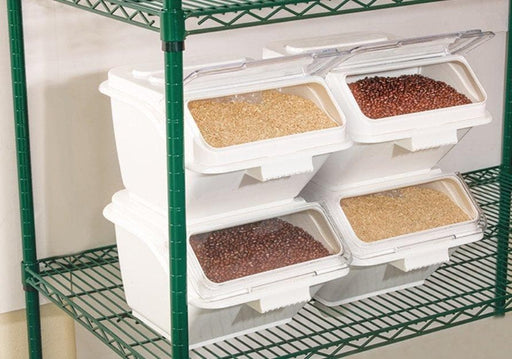
Ingredient bins can be useful for storing bulk dry goods like flour, sugar, and rice. They may protect contents, improve cleanliness, and help speed up prep. Using bins of different sizes can accommodate various ingredients, ensuring easy access and preventing spillage.
View Ingredient Bins
Transparent Storage Containers
Clear containers may provide instant visibility and help kitchens manage inventory more accurately. When staff can see what’s inside, fewer mistakes are likely to happen. These containers may also help in portion control, preventing unnecessary waste.
Shop Transparent Containers
Industry insight: Standardized containers, consistent labeling, and clearly defined storage zones can significantly reduce errors and may improve kitchen efficiency. Regular audits and adjustments to the storage system can further enhance performance.
Final Thoughts
Organization is one of the most cost-effective improvements a commercial kitchen may implement. With the right shelving, storage solutions, and systems in place, kitchens can run smoother, staff can work faster, and waste is likely to drop. Consistent review of kitchen organization can also identify areas for improvement and enhance overall workflow efficiency. Browse the full Omni Food Equipment catalog for reliable refrigeration, cooking equipment, and smallware to support your operation's long-term success.