

Sandwich/Salad Prep Table vs. Pizza Prep Table: What’s the Difference & Which One Do You Need?
The Complete Guide to Cleaning, Maintenance, Pan Sizes & Pro Tips for Busy Kitchens

When it comes to running a high-efficiency commercial kitchen, prep tables are your unsung heroes. Whether you're assembling sandwiches, plating salads, or stretching out freshly made pizza dough, the right prep table keeps service smooth, organized, and safe.
“What’s the actual difference between a sandwich/salad prep table and a pizza prep table ,and which one should I buy?”
Let’s break it down clearly, with maintenance tips, cleaning steps, labeling hacks, and product suggestions from us.
Sandwich / Salad Prep Table: What It’s Designed For
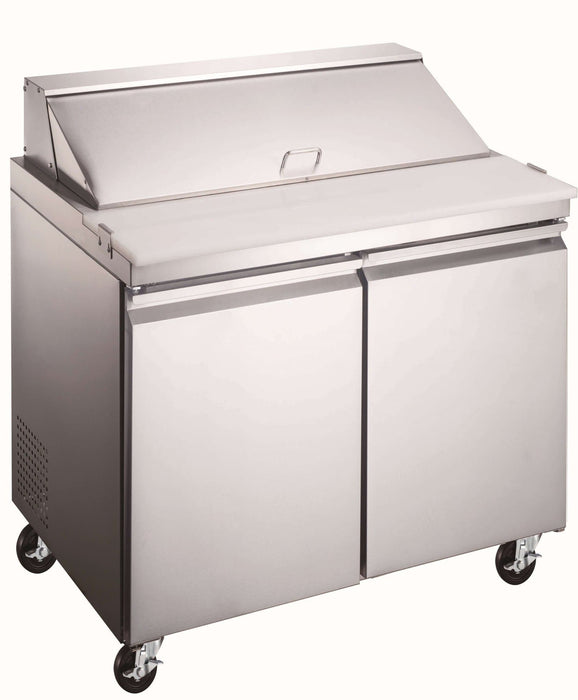
Canco SP36-8 Double Door 36" Refrigerated Sandwich Prep Table
Sandwich and salad prep tables are all about quick assembly, easy access, and ingredient freshness.
Key Features
-
Shallower cutting board (usually 8–10") ideal for sandwiches, wraps, and salads
-
Smaller pan capacity compared to pizza prep tables
-
Fits 1/6 and 1/9 pans for toppings, deli meats, cheeses, dressings, veggies
-
Lower-profile lid for quick grab-and-go assembly
-
Designed for fast-moving lunch lines, cafés, and deli

Best For
-
Sandwich shops
-
Salad bars
-
Cafés
-
Fast-casual restaurants
Pizza Prep Table: What Makes It Different
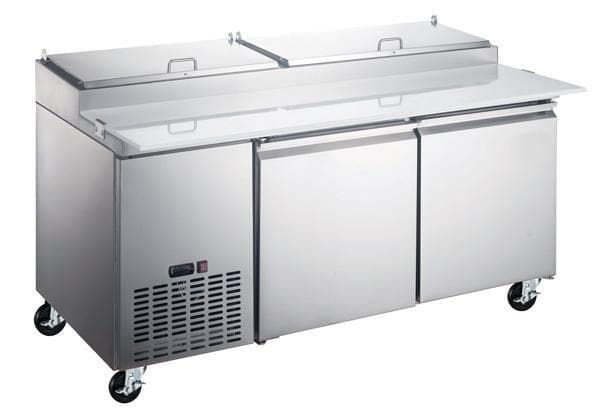
Canco PT71-9 Double Door 71" Refrigerated Pizza Prep Table
Pizza prep tables are built for bigger ingredients, larger workspace, and heavier production.
Key Features
-
Extra-wide cutting board (typically 16–20") — enough room to stretch dough and build pizzas
-
Fits 1/3 pans or full-size pizza topping pans
-
Holds more bulk ingredients like cheese, mushrooms, pepperoni, olives
-
Refrigerated dough storage below
-
A deeper, higher hood protects ingredients when the lid is open longer
Best For
-
Pizzerias
-
Italian restaurants
-
Ghost kitchens
-
Food trucks offering pizzas
Pan Sizes: What Each Prep Table Uses
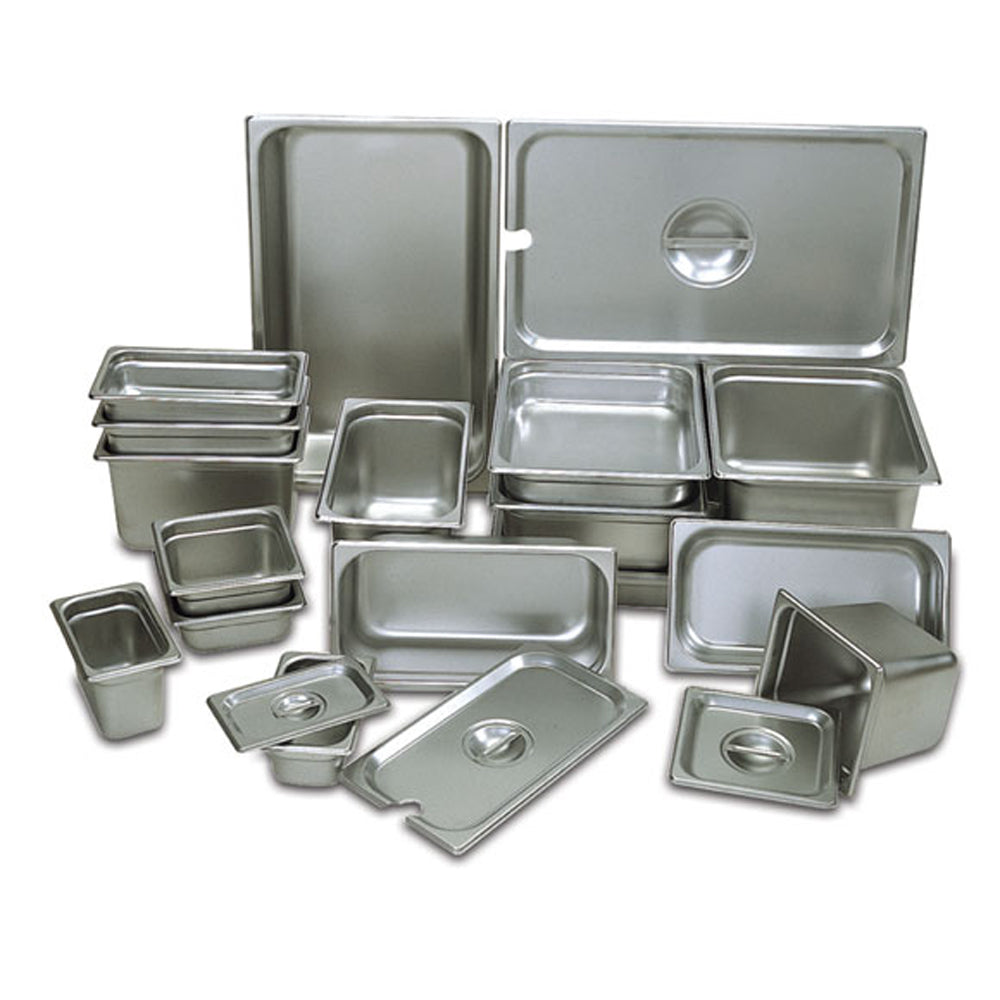
Knowing pan sizes helps you choose the right table AND label ingredients properly.
Common Pan Sizes
-
1/9 pan – small items (jalapeños, olives, dressings)
-
1/6 pan – common for sandwich prep (lettuce, tomatoes, sliced cheese)
-
1/3 pan – pizza toppings (bulk cheese, pepperoni, mushrooms)
-
1/2 pan – large volume items
-
Full-size pan – dough balls, large batches, deep storage
Sandwich prep tables: Mostly 1/6 & 1/9 pans
Pizza prep tables: Mostly 1/3 & full-size pans
How to Clean Your Prep Table Properly (Step-by-Step)
Daily Cleaning
-
Turn off and unplug the unit.
-
Remove all pans and discard old ingredients.
-
Wash pans with warm water + mild detergent.
-
Sanitize with food-safe sanitizer.
-
Wipe cutting board with hot, soapy water (NO bleach).
-
Remove the pan rail and clean underneath.
-
Clean door gaskets with a soft cloth ,prevents cracking.
-
Wipe exterior stainless steel with stainless-safe cleaner.
Weekly Cleaning
-
Pull out the unit and clean behind/under it.
-
Clean condenser air intake grilles.
Monthly or Bi-Monthly Maintenance
-
Vacuum condenser coils (VERY important for longevity).
-
Check door seals for wear.
-
Ensure temperature stays at ≤ 4°C (40°F).
-
Confirm lids close fully to maintain food-safe temps.
Pro Tips: How to Label Your Prep Table Pans Correctly
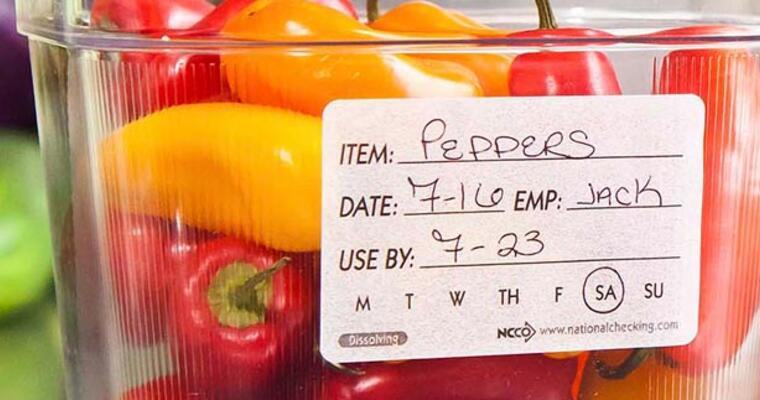
Good labeling = less food waste + faster service + better organization.
Easy Labeling Methods
-
Use removable dissolvable labels (preferred for foodservice).
-
Label the front edge of each pan so your team sees it instantly
-
Color-code:
- Red = meats
- Green = veggies
- Blue = dairy or cheese
-
Keep a prep map taped inside the lid so every staff member places ingredients in the right spot.
Ready to upgrade your winter kitchen?
Explore our complete product range at OmniFoodEquipment.com or contact our team for personalized recommendations.
Our team also offers space planning, design-build services, and product customization to help you optimize every square foot of your operation.