

3-Burner vs 4-Burner Shawarma Grills - Choosing the Right Fit For Your Business
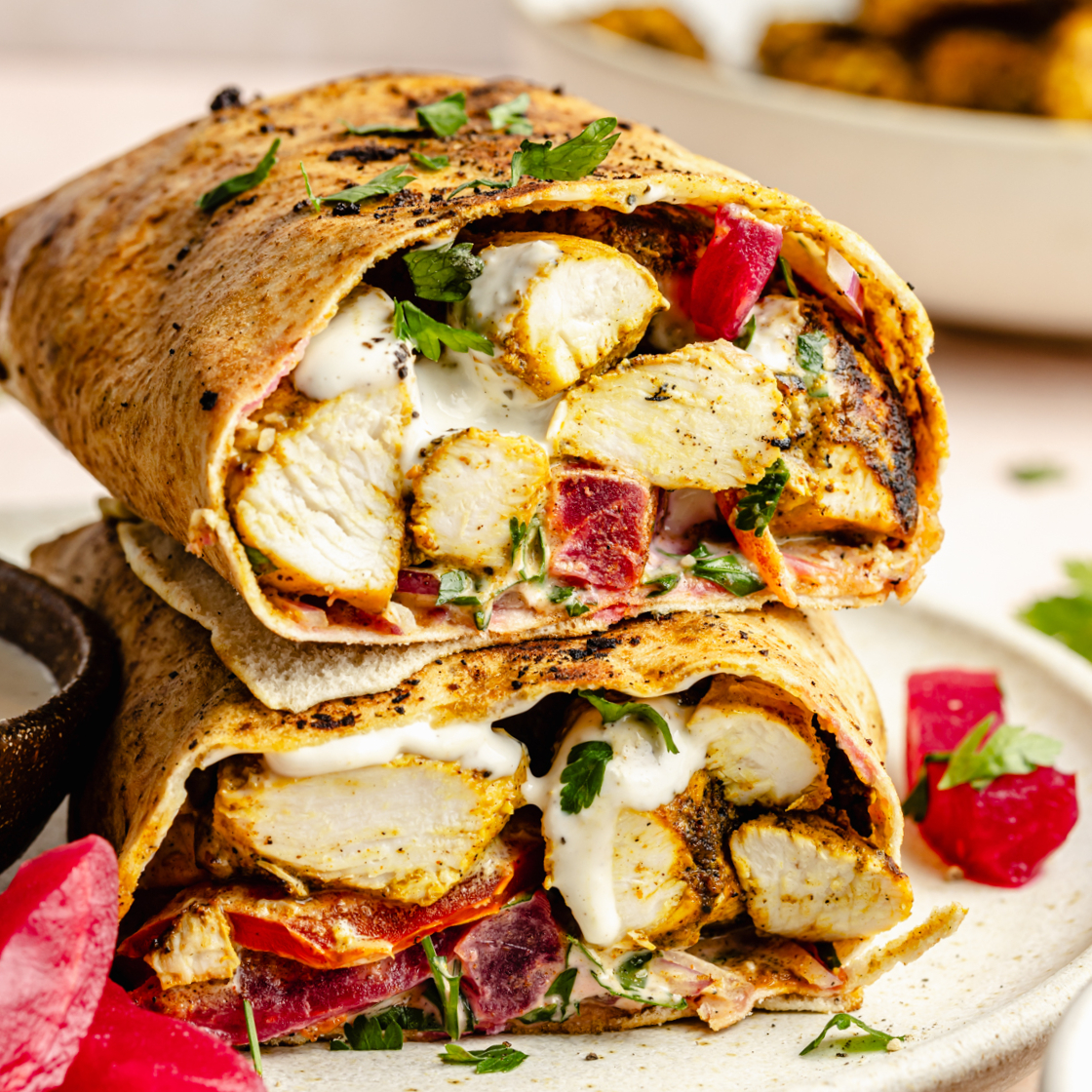
Vertical Shawarma Grills for Your Restaurant or Kiosk
For a restaurant or kiosk entering the shawarma/fast-casual scene, investing in a quality vertical shawarma grill can significantly improve service speed, portion consistency, and presentation—all essential for customer satisfaction and repeat business. A vertical broiler with a rotating meat stack and steady heat is ideal for quick service restaurants, food court kiosks, street vendors and fast casual spots that serve shawarma, donor kebab, gyros or similar wraps.
Because of the rotating spit and continuous roasting, you can slice off meat on demand for wraps or plates. That speed and flexibility works very well during lunch and dinner rush hours. Vertical broilers take up less floor space compared to flat grills or ovens which makes them a smart choice for kitchens with limited space or food-court-style setups.
3 Burner vs 4 Burner Shawarma Grills - Choosing the Right Fit

A 3 burner vertical broiler offers reliable roasting with fewer burners. It often delivers even cooking and consumes less gas or electricity compared to larger units. This smaller capacity model is often more compact making it ideal for small kitchens, kiosks or food trucks where space is limited. Buy Here
For businesses with moderate footfall or those just starting out, a 3 burner grill gives a good balance between cost, capacity and ease of maintenance.
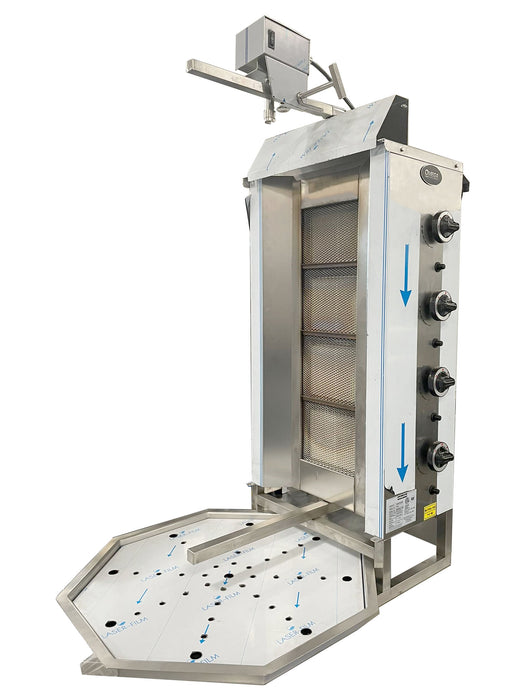
A 4 burner broiler supports larger meat stacks and higher throughput. This makes it great for busy shawarma shops, fast casual restaurants or multi-shift kitchens. Buy Here
With independent burner controls you get flexible heat management. This helps handle different meat types or larger quantities seamlessly.
If you expect high-demand service periods such as peak lunch or dinner or you offer multiple kinds of meats (chicken, lamb, beef) a 4 burner grill gives the reliability and consistency needed for continuous service.
Tip: If you are starting small picking a 3 burner grill makes sense. If you expect to scale or already serve high volume invest in a 4 burner grill. Check our collection
Key Parts of a Shawarma Grill
- Vertical Spit or Skewer with Spit Motor — The meat stack rotates slowly ensuring even cooking on all sides. For commercial use, motorized spit rotation ensures uniform cooking with minimal manual labor.
- Heating Elements — These provide the heat necessary for roasting. In multi-burner units, burners are individually controllable allowing precise heat zones and flexible temperature control.
- Adjustable Burner to Spit Distance or Heat Reflectors / Shields — Many grills let you adjust the distance between burners and meat stack to control cooking intensity and avoid over-charring or undercooking. Good control over heat zone ensures even cooking and energy efficiency.
- Drip Tray or Grease Collector — As meat roasts fat drips down. A drip tray collects grease and juices to keep cooking area clean and reduce fire or flare-up risk. This is essential for hygiene and safety.
- Stainless Steel Body or Housing — Commercial grade stainless steel construction ensures durability, hygiene and ease of cleaning. It resists corrosion and withstands high heat — ideal for heavy use in restaurant kitchens.
- Gas Lines/Valves or Electrical Components (for gas/electric models) — These control fuel supply or electricity, ignition, flame control and motor operation. Proper installation and maintenance of these components is critical for safety and stable performance.
Maintenance and Care
Periodic Maintenance (Weekly or as per Usage)
- Deep-clean removable parts such as drip trays, guards and spit rods.
- Inspect burners or heating elements for blockages or uneven flames.
- Check the spit rotation mechanism, motor or gears; ensure rotation is smooth, no wobble or unusual noise. Lubricate moving parts per manufacturer instructions.
- Inspect grease collection system components and replace if worn or damaged.
Quarterly (Depending on Use)
- Perform a full safety inspection of gas connections, hoses, valves, regulators (for gas models), wiring and seals (for electric models). Buy Here
- Ensure burner to spit distance adjustment or heat shields are functioning correctly.
- Replace worn or damaged parts before they fail.
Neglecting maintenance can lead to poor cooking quality: uneven cooking, dryness, burnt exterior or uncooked inside.
Ready to upgrade your winter kitchen?
Explore our complete product range at OmniFoodEquipment.com or contact our team for personalized recommendations.
We also offer space planning, design-build services, and product customization to help you optimize every square foot of your operation.
Know More